10142026

-
POLITICS
-

Helping Hand
Britain must be allowed to save face, and Europe must find a way to open the door to their return. All else would be a terrible mistake...
-
-
A Mentsh
-

Jan Bayer
The entrepreneur and humanist is the father of the German edition of JVG who provided us with generous and unstinting encouragement and support…
-
-
ARTS&CULTURE
-

Looted Art
It’s high time for restitution procedures to be stepped up in order to ensure that art works are returned to their lawful owners, says Karin Prien…
-
-
POLITICS
-

Security has a Price
Order of the day: Germany take its fair share of the alliance’s burden also financially, thus strengthening the European pillar in NATO...
-
-
Jewish Voice
-

The Indispensable Ones
The JVG could only be born and remain in operation with the help of many idealistic friends who supported us in word and deed over the years…
-
-
Advertorial
-

Full Cycle
Used plastics must not become waste – they belong back in the circular economy. The goal is a world without waste, not a world without plastic...
-
-
ARTS&CULTURE
-

Women’s Suffrage
Jewish women activists succeeded in their struggle for female voting rights just over 100 years ago in the Weimar Republic…
-
-
LIFE
-

Soccer and Memory
Long priding itself on its Jewish roots and tradition, soccer club Eintracht Frankfurt is now beginning to confront unsavory facts from its past…
-
-
ECONOMY
-

Investment Strategy
Devising a profitable and durable investment strategy in times of economic slowdown is becoming increasingly challenging, says Jens Spudy…
-
-
ARTS&CULTURE
-

Ode to Joy
“All Men Become Brothers” – A poem made Friedrich Schiller immensely popular with the Jews promising them their integration in society at large…
-
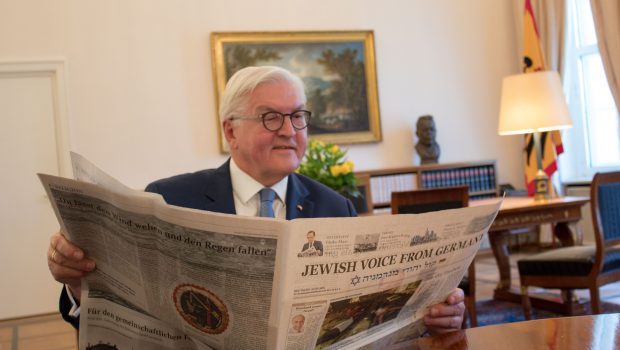
Jews & Germans: A Vibrant Reality
“Only if Jews in Germany feel completely at home will our country be completely itself,” says Federal President Frank-Walter Steinmeier in an exclusive interview with the Jewish Voice. Steinmeier also voices his concerns about populism and the growing political polarisation in Germany. “However, I do not see an acute crisis that threatens the very survival of democracy in Germany”… (more…)
-
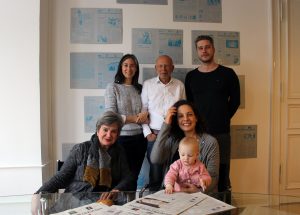 Jewish Voice
Goodbye, Auf Wiedersehen, Lehitraot
Thank You to our readers, advertisers, friends, advisory board and supporters. Since 2012, you have encouraged us with your energy, interest and advice. That made it possible for us to provide you with an informative and independent newspaper, and advocate for vibrant German-Jewish-Israeli cooperation. But we have decided to stop publishing the Jewish Voice… -
 ESSAY
ESSAY
Hope Moves Slowly
German-Jewish relations have a lot in common with the topic of love and hate: we know nearly everything about it but still understand next to nothing. Over and over again, we find ourselves surprised by the violent intensity as well as the intimacy of this relationship. Progress in German-Jewish coexistence in our time may only be achieved at turtle’s speed. But hope remains… -
 ARTS&CULTURE
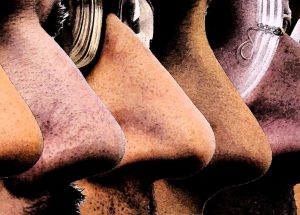
Panofsky̕s Nose
1827: “Look at that ugly dwarf! What a long nose he has…” 2011: “We found a short, gnome-like man with large eyes and a large nose… ” Sounds all too familiar? In an exclusive essay for the Jewish Voice, Gerda Panofsky brings to our attention pervading anti-Semitic prejudices and clichés in literature and academia about her late husband, the art historian Erwin Panofsky… -
 New Novel
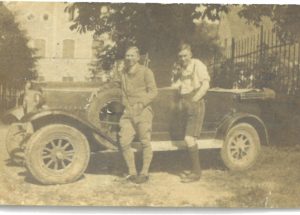
German Country Jews
All his life, Ludwig Seligmann would fondly recall the days of his youth in Ichenhausen, a small town in Bavaria (1907-1933). In his twilight years, Ludwig jotted down memoirs of this time. These notes are the basis for a novel penned by his son Rafael, the publisher of the Jewish Voice from Germany. The story of a life as it was in a distant past among Germany’s country Jews during a decisive period of German history... -
Uncategorized